Tree Roots in Drains: How to Tell and What to Do Without Excavation
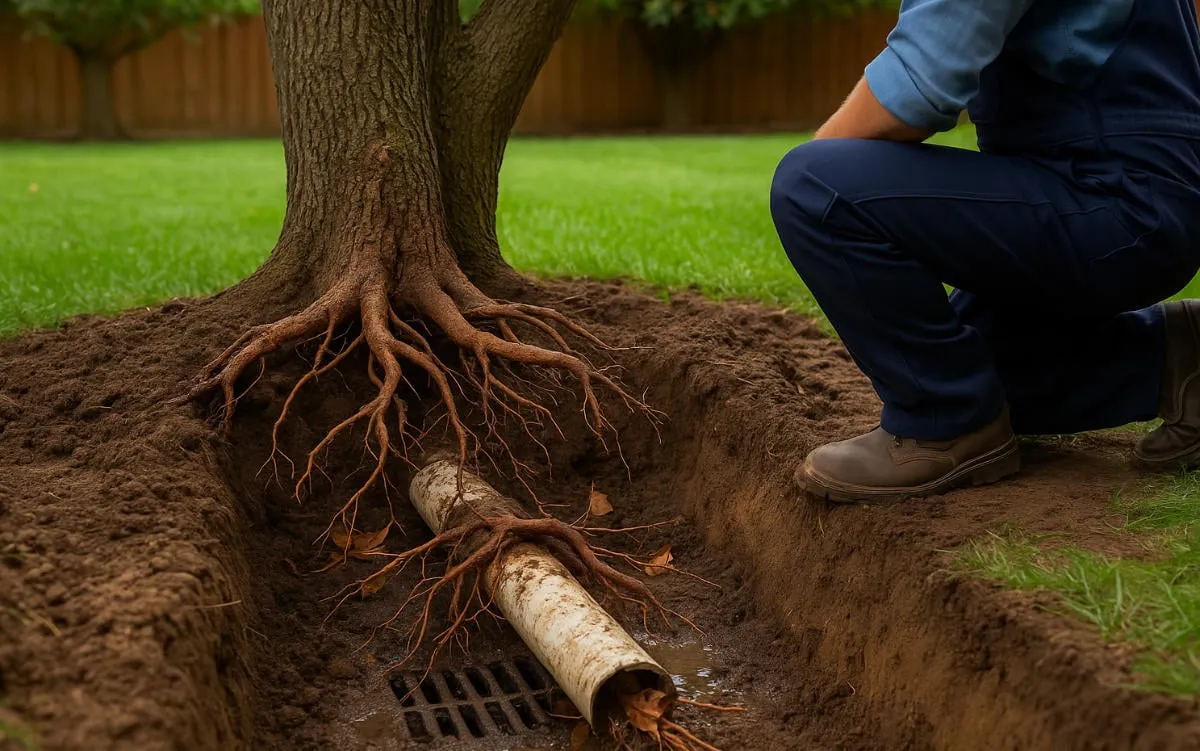
Tree roots are a common cause of blocked drains. We explain the warning signs and how trenchless CIPP relining can solve the problem permanently without digging.
Signs That Tree Roots Are Invading Your Drains
Tree roots naturally seek out moisture and nutrients, making your underground drain pipes an ideal target. The first signs are often subtle and easily mistaken for other issues. The most common indicator is a recurring blockage, particularly one that clears after a professional jetting only to return a few weeks or months later. You might also notice unusually slow drainage in multiple fixtures, or hear gurgling sounds from toilets or floor drains as water struggles to pass through the constricted pipe. In the garden, an unusually lush and green patch of grass near the drain line can signal that roots are tapping into a nutrient-rich leak.
The Long-Term Damage Caused by Root Intrusion
When a tiny root hair finds a small crack or loose joint in a pipe, it grows inside. Over time, it thickens and expands, acting like a living wedge that forces the pipe joints apart and creates larger cracks. This not only causes blockages but can also lead to significant structural damage to the pipe itself. As the roots fill the pipe, wastewater can back up and eventually escape into the surrounding soil, potentially contaminating your garden. Traditional rodding or jetting can clear the immediate blockage, but it leaves the root network intact, guaranteeing a repeat performance. Excavating to replace the pipe is a last resort, as it is disruptive, time-consuming, and costly.
Our Permanent, Trenchless Solution: CIPP Relining
We specialise in a permanent, no-dig solution that eliminates the root problem without excavating your garden or driveway. Our engineers use a process called Cured-In-Place Pipe (CIPP) lining. First, we perform a detailed CCTV drain survey to pinpoint the exact location and extent of the root intrusion. Then, we clean the pipe thoroughly using high-pressure water jetting.
Next, we insert a flexible, resin-saturated liner tube into the damaged pipe. This liner is inflated to fit tightly against the host pipe's inner walls. The resin is then cured, typically using hot water or UV light, hardening it into a new, seamless, jointless pipe-within-a-pipe. This new pipe is highly resistant to root penetration, as there are no joints or cracks for roots to exploit. The structural integrity of your drainage system is restored, and because the work is done via existing access points, it involves minimal disruption.
Why Choose No-Dig Drain Relining?
Choosing our no-dig approach offers clear advantages. The process is significantly faster than a full excavation and replacement. There is no need for large, messy trenches, so your landscaping, driveways, and structures remain undisturbed. The new CIPP liner is highly durable and corrosion-resistant, effectively giving your drain a new, extended lifespan. It is a single, definitive repair that addresses both the immediate blockage and the structural weakness that allowed the roots in, providing you with lasting peace of mind.
Frequently asked questions
Can you remove tree roots without digging up my garden?
Yes, absolutely. Our primary method involves no excavation. After clearing the initial blockage via jetting, we install a CIPP liner within the existing pipe. This creates a new, seamless, root-resistant pipe without needing to dig trenches in your garden.
Will relining my pipe stop roots from coming back?
Yes, a properly installed CIPP liner is an effective, permanent barrier. The new pipe is jointless and seamless, eliminating the cracks and loose joints that roots exploit. This prevents re-infiltration and provides a long-term structural solution.
Is CIPP relining suitable for all types of pipes damaged by roots?
CIPP relining is highly versatile and can be applied to many common pipe materials affected by roots, such as clay, concrete, cast iron, and PVC. Our initial CCTV survey confirms the pipe's condition and suitability for the relining process.