Who Is Responsible for a Shared Drain Blockage? A Clear Guide
Shared drain blockages fall on either the water company or homeowners. We clarify the law and how no-dig repairs resolve issues with minimal disruption.
Understanding Your Drainage Responsibilities
Dealing with a blocked shared drain can be stressful, not least because of the uncertainty over who is responsible for fixing it. The key distinction lies in the legal definition of the 'private drain' and the 'public sewer'. In England and Wales, the responsibility for maintaining a drain is typically split between the homeowner and the regional water company. This boundary is defined not by where the blockage occurs, but by the type of pipe and who uses it. Clarity on this point is the first step towards a swift and effective resolution.
The Boundary: Public Sewer vs. Private Drain
A 'private drain' serves only your property. Once this drain connects with a drain from another property, the combined pipe becomes a 'lateral drain' until it reaches the public sewer. Since 2011, water companies have been responsible for maintaining most lateral drains and all public sewers. This means if a blockage is in a pipe that serves more than one property, even on your land, it is often the water company's responsibility to clear it. Conversely, a blockage within a pipe that serves only your home remains your responsibility to address.
The simplest action is to contact your water provider. They will usually conduct a free investigation to determine the location and nature of the blockage, confirming who is liable for the repair. If the issue is on their side, they will handle it at no cost to you. If it falls within your private drain, you will need to arrange for a repair.
Our Trenchless Solution for Private Drain Repairs
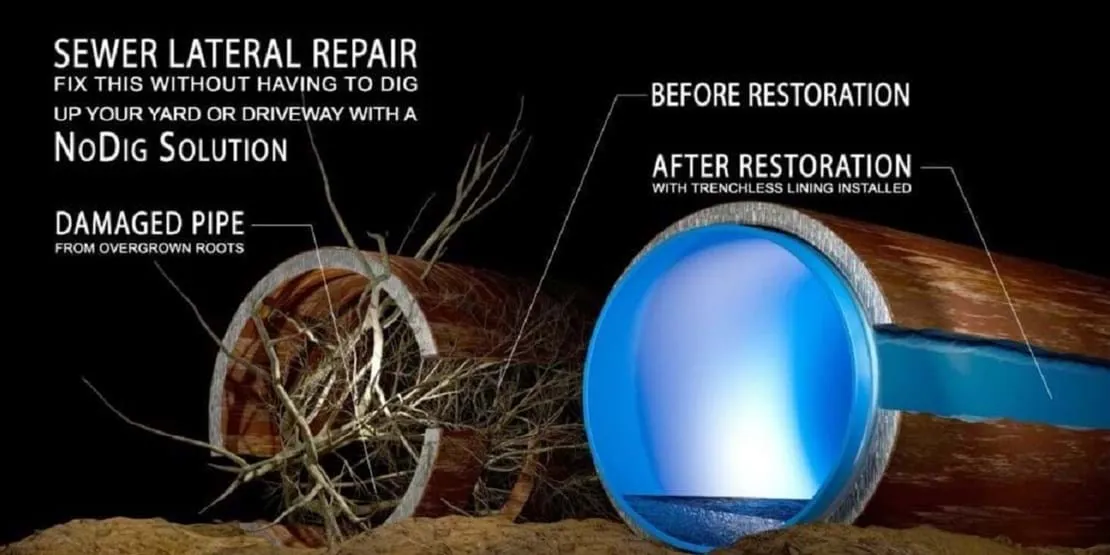
If the blockage and any associated damage to the pipe are your responsibility, the traditional solution of excavation can be daunting. This is where our expertise in trenchless, no-dig technology provides a superior alternative. Our specialists use methods like Cured-In-Place Pipe (CIPP) lining to repair or reinforce damaged drains from within.
CIPP relining involves inserting a resin-impregnated liner into the existing pipe and curing it in place to form a new, seamless, and structurally sound pipe-within-a-pipe. This process is performed via access points like existing manholes, eliminating the need for extensive digging. The result is a permanent repair that causes minimal disruption to your garden, driveway, or landscaping, and is completed in a fraction of the time of traditional excavation.
Our approach aligns perfectly with the need to resolve shared or private drain issues efficiently. By minimising excavation, we reduce the mess, restore functionality quickly, and provide a long-lasting solution that prevents future root ingress and collapses.
Coordinating a Swift Resolution
For blockages in shared sections, coordination is key. While the water company handles the clearance, any pre-existing damage to the pipe that contributed to the blockage might require a more permanent repair. In such cases, we can work alongside the utility provider to survey the cleared pipe and, if necessary, plan a trenchless lining project to prevent recurrence. This collaborative approach ensures the entire system is returned to full integrity with the least possible disruption for all connected households.
Frequently asked questions
How do I know if my blocked drain is shared?
If your property is connected to the mains sewer, the pipe from your property boundary to the sewer is often a shared lateral drain. The surest way is to call your water company; they will inspect and confirm responsibility for free.
Can you fix a shared drain if the water company says it's my private section?
Absolutely. If the blockage or damage is confirmed to be within the private drain serving only your property, our engineers can deploy no-dig CIPP lining to repair it without excavating your garden or driveway.
Is trenchless repair a permanent solution for a damaged shared drain?
Yes. CIPP lining creates a new, jointless pipe within the old one, effectively sealing cracks and preventing root intrusion. It restores full flow and structural integrity for decades, offering a long-term, robust solution with minimal disruption.