No-Dig Drain Repair vs Excavation: Which Solution Is Right for You?
We compare the key differences between modern no-dig drain repair methods and traditional excavation, helping you choose the right solution for your London property.
Understanding the Core Approaches
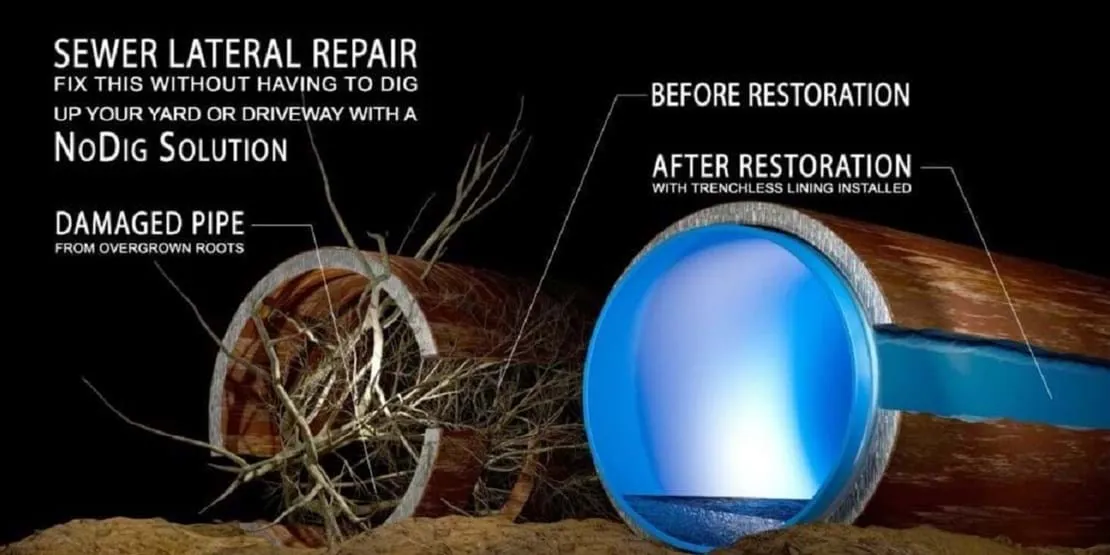
When a drain or sewer line fails, property owners are typically presented with two fundamental repair approaches: traditional excavation or modern trenchless methods. Traditional excavation involves digging open trenches to access and replace the damaged pipe. This is a well-understood process, but its impact on your property, garden, and daily routine can be substantial. In contrast, no-dig drain repair, specifically techniques like Cured-In-Place Pipe (CIPP) relining, allows our engineers to rehabilitate pipes from within, using existing access points.
The Advantages of No-Dig Drain Repair
Our focus is on providing precise, minimally disruptive solutions. No-dig repair, such as CIPP relining, involves inserting a resin-saturated liner into the damaged pipe. This liner is then cured in place, often using hot water or steam, to form a strong, jointless, and corrosion-resistant new pipe within the old one. The primary benefit is the drastic reduction in excavation. There's no need for large, disruptive trenches that ruin landscaping, driveways, or patios. This preservation of your property's surface is a significant advantage in dense urban areas like London, where garden space is precious and reinstatement costs for hard landscaping can be high.
Furthermore, the process is typically completed much faster than a full excavation and replacement. Since we avoid the lengthy digging and backfilling stages, the repair itself is often a matter of hours rather than days. This means less downtime for your property and a quicker return to normal use of your drainage system. The structural integrity of the new liner is also a key point; it creates a seamless pipe that resists root intrusion and corrosion better than traditional segmented pipes.
When Traditional Excavation Might Be Necessary
While we are specialists in trenchless technology, we maintain a balanced view. There are specific circumstances where excavation remains the necessary or more prudent choice. If a pipe has completely collapsed or suffered a severe, localised structural failure, a liner may not have a sufficient host pipe to support it. Similarly, if the pipe has undergone significant ground movement and is misaligned, a liner might not navigate the severe offset. In these cases, our engineers will conduct a thorough CCTV survey first to assess the damage accurately. If excavation is deemed necessary, we will discuss it transparently, outlining the reasons and managing the process with as much care and efficiency as possible to minimise the inevitable disruption.
Making the Right Choice for Your Property
The decision between no-dig repair and excavation hinges on a precise diagnosis. We always begin with a comprehensive CCTV drain survey. This allows our engineers to inspect the pipe's interior, identify the exact nature and location of the problem, and measure the pipe's condition. Based on this visual evidence, we can provide a clear, reliable recommendation. For the majority of repairs involving cracks, holes, root damage, or general wear, CIPP relining offers a robust, long-lasting, and far less invasive solution. It allows us to fix the problem precisely where it lies without disturbing the surrounding area, aligning perfectly with our commitment to minimal disruption for London homeowners and businesses.
Frequently asked questions
Is no-dig drain repair as strong as a new pipe?
Yes, the cured-in-place liner forms a jointless, corrosion-resistant pipe within the old one. It is structurally robust and designed to last for decades, often with a smoother interior that improves flow.
Will a CCTV survey confirm if no-dig is possible?
Absolutely. A CCTV survey is the essential first step. It provides our engineers with a clear video assessment of the pipe's condition, allowing us to determine if relining is suitable or if other methods are required.
How much disruption does CIPP relining actually avoid?
It avoids the major disruption of digging large, open trenches across your property. There is typically no need to remove landscaping, dig up driveways, or close off large areas. Access is usually gained via existing manholes or small, targeted excavation points.